
AC Repair in Round Rock, TX

Is Your Air Conditioner Blowing Warm Air in the Heat?
Are you struggling with a malfunctioning air conditioner during the intense Texas heat? If your AC is blowing warm air, making your home uncomfortable and unsafe, you need fast, reliable service to restore cool comfort immediately. At AC Superheroes, we specialize in emergency AC repair in Round Rock, TX, providing rapid diagnostics and expert fixes to get your system running efficiently again. Don’t suffer through another hot day; our local technicians are ready to respond 24/7 and solve your cooling problems with transparent pricing and guaranteed results.
Get Your AC Fixed Now
Stop the heat from ruining your day. Contact AC Superheroes for immediate AC repair service in Round Rock. We’ll quickly diagnose the issue, explain your options clearly, and restore your home’s comfort without delay.
Schedule Your Emergency Repair
When your cooling system fails during a scorching Texas summer, the temperature inside your home can rise to dangerous levels within hours. You need immediate restoration of comfort, not a sales pitch or a long wait time while the humidity builds up in Round Rock. Call AC Superheroes now to schedule an emergency diagnostic or to discuss financing options for major repairs.
We understand that a broken AC unit disrupts your entire life, making sleep impossible and daily tasks unbearable. Our technicians are deployed locally to ensure that homeowners in Round Rock do not have to endure prolonged heat exposure due to mechanical failure. We focus on identifying the root cause of the breakdown immediately so you can return to a cool, safe environment.
- Rapid response teams are available 24/7 to address urgent cooling failures.
- Comprehensive warranties on all repairs ensure your system stays fixed.
- Upfront, flat-rate pricing means you know exactly what you will pay before any work begins.
All services are fully licensed, bonded, and insured, ensuring your property is protected while we restore your climate control.
What to Expect From Your Service Visit Today
When you request a repair, the objective is to turn the cold air back on as quickly and safely as possible. The process begins with a comprehensive system diagnostic. An air conditioner is a complex loop of pressure and temperature; changing one variable impacts the entire system. A technician does not simply guess at parts; they measure specific operational metrics to pinpoint the failure.
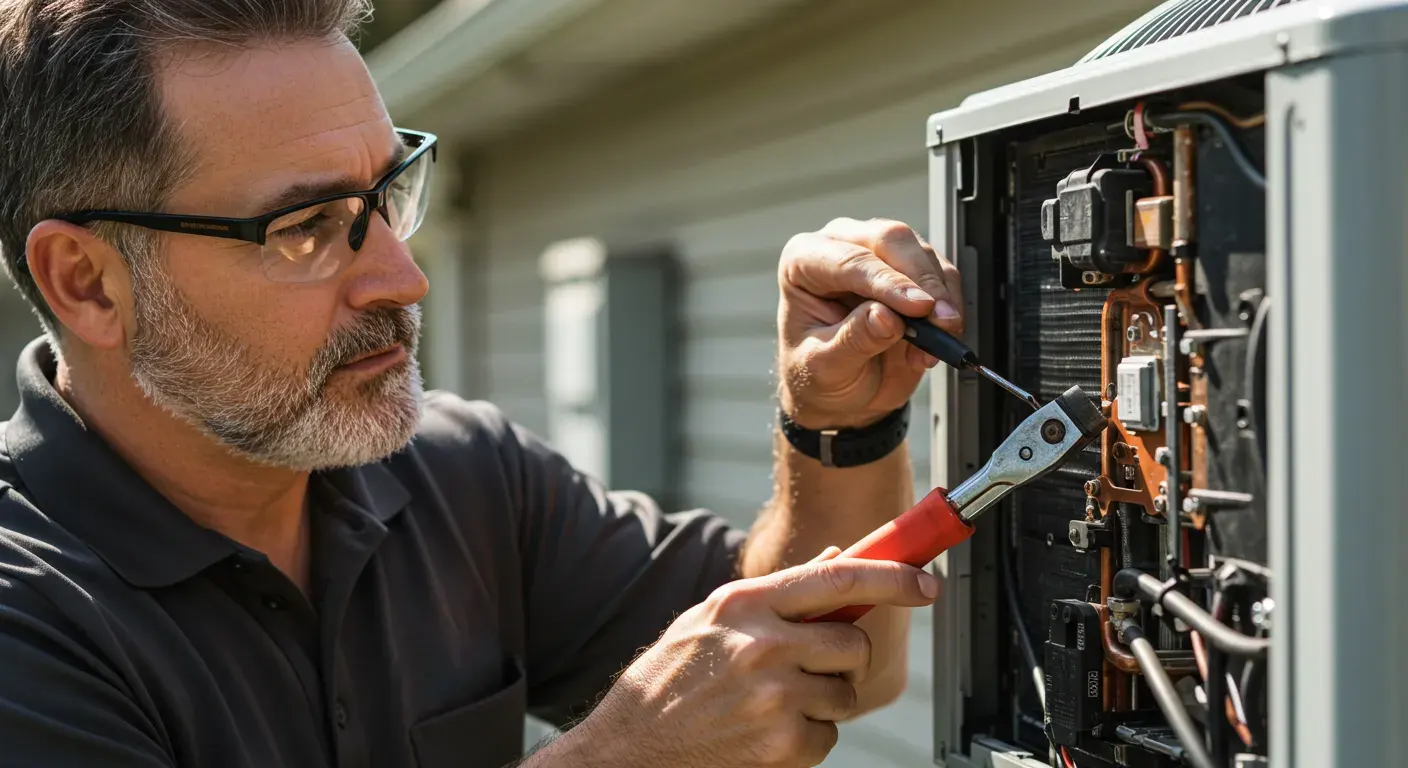
Upon arrival, the technician assesses the entire HVAC envelope. This includes checking the thermostat communication, measuring airflow at the registers, and inspecting the outdoor condenser unit. The goal is to distinguish between a simple airflow restriction—like a clogged filter or blocked vent—and a mechanical failure like a seized compressor or a leaking evaporator coil.
You will receive a detailed report of the findings. This includes the current condition of critical components such as the blower motor, the run capacitor, and the refrigerant levels. If a part has failed, we explain exactly what it does, why it failed, and what is required to fix it. You are given clear options: a direct repair of the broken component, a proactive repair of aging parts nearby, or, in severe cases, a discussion about system viability.
Common Mechanical Failures in Extreme Heat
The climate in Texas puts immense strain on cooling equipment. Long run cycles required to combat 100°F+ days often push aging components to their breaking point. Understanding what goes wrong helps in making informed decisions about repairs.
Capacitor Failure and Electrical Issues
The most frequent cause of a sudden breakdown is a failed capacitor. These small electrical components provide the torque necessary to start your compressor and fan motors. In the high heat of Round Rock, capacitors degrade faster due to overheating. When a capacitor fails, the compressor may hum but fail to start, eventually tripping the breaker or overheating the motor windings.
Contactors are another common electrical failure point. These are the switches that control the flow of electricity to your compressor. Over time, the contact points become pitted and carbonized, preventing the voltage from reaching the motor or causing it to stick in the "on" position, which can lead to severe compressor damage.
Refrigerant Leaks and Coil Freezing
An air conditioner does not consume refrigerant like a car consumes gas. If your system is low on Freon or Puron, it has a leak. Leaks often develop in the evaporator coil (located inside) or the condenser coil (located outside) due to vibration and corrosion.
Symptoms of a leak include:
- Ice building up on the copper lines or the outdoor unit.
- The system is running constantly but failing to lower the temperature.
- Hissing or bubbling noises near the indoor unit.
- Water pooling around the furnace or air handler.
AC Superheroes technicians use electronic leak detectors and UV dye to locate the exact source of the leak. Simply "topping off" the refrigerant is not a permanent solution and can be illegal depending on the refrigerant type. The leak must be repaired, or the component replaced, to ensure the system holds pressure.
Condensate Drain Blockages
In humid subtropical climates, your AC removes gallons of water from the air daily. This water exits through a condensate drain line. Over time, algae and sediment can clog this line, causing water to back up. Most modern systems have a float switch that shuts the unit down to prevent water damage to your ceilings or floors. If your thermostat is blank or the screen is off, a tripped float switch due to a clogged drain is a likely culprit.
The Repair Process: From Diagnostic to Cooling
We utilize a systematic approach to ensure no detail is overlooked during the repair process. This minimizes the chance of callbacks and ensures the longevity of the fix.
- System Isolation and Safety Check: First, the technician disconnects power to the unit to ensure safety. They inspect the electrical disconnect box and the main breaker panel to verify there are no underlying power supply issues.
- Component Testing: Using multimeters and pressure gauges, the technician tests the resistance of motors, the capacitance of start components, and the pressures of the refrigerant cycle. This data provides a health report of the system.
- Diagnosis and Quote: Once the issue is isolated, you receive a flat-rate price for the repair. This price includes parts, labor, and taxes. There are no hourly billing surprises.
- Execution of Repair: The technician replaces the faulty component using OEM (Original Equipment Manufacturer) or high-quality aftermarket parts that meet or exceed specifications.
- Performance Verification: After the part is installed, the system is restarted. The technician monitors the "superheat" and "subcooling" temperatures, critical metrics that indicate if the refrigerant cycle is balanced. They also check the temperature drop (delta T) across the evaporator coil to confirm the system is actually cooling the air.
- Site Cleanup: Old parts, packaging, and debris are removed from your property. The workspace is left as clean as it was found.
Critical Decision Guide: Repair vs. Replace
Homeowners often face a difficult choice when an older unit breaks down: is it worth fixing, or is it time to invest in a new system? This decision should be based on math and the condition of the equipment, not emotional pressure.
The 50% Rule
A general industry standard is the 50% rule. If the cost of the repair approaches 50% of the value of a new system, replacement is usually the wiser financial choice. For example, if you have a compressor failure on a 12-year-old unit, the cost of the compressor plus labor is significant. putting that money toward a new system with a 10-year warranty often yields a better return on investment; check our promotions for savings.
Age and Refrigerant Type
Air conditioners in Texas typically last 10 to 15 years due to the heavy workload. If your unit is over 12 years old, parts may be becoming obsolete. Furthermore, if your system uses R-22 (an older, phased-out refrigerant), repair costs involving refrigerant will be astronomically high. Newer systems use R-410A or A2L refrigerants, which are more efficient and environmentally friendly.
Frequency of Breakdowns
If this is the third time you have called for a repair in the last two years, the system is likely suffering from systemic failure. Continuing to replace individual parts is throwing good money after bad. A reliable system should not require major repairs annually.
Local Considerations for AC Repair in Round Rock
Operating an HVAC system in Central Texas requires adherence to specific local codes and an understanding of regional infrastructure.
Permitting and Regulations
Round Rock and the surrounding municipalities have specific building codes regarding HVAC repairs and replacements. Major repairs, such as replacing a compressor or a coil, may not always require a permit, but full system replacements strictly do. Our team handles all necessary paperwork to ensure your system is compliant with local laws. This is crucial for maintaining your home's resale value and insurance validity.
Electrical Grid and Efficiency
The Texas power grid can be volatile during peak summer months. Systems with higher SEER2 (Seasonal Energy Efficiency Ratio) ratings place less strain on the grid and lower your utility bills. When repairing older units, we ensure that electrical connections are tight and efficient to prevent unnecessary amperage draw that could trip sensitive breakers during grid fluctuations.
Hard Water and Maintenance
While primarily an issue for plumbing, the hard water in the region can affect humidifiers and condensate pumps attached to your AC system. Mineral buildup can cause pumps to seize or lines to clog faster than in other regions. Our technicians check for these specific local issues during every repair visit.
Why Professional Diagnosis Matters
Attempting DIY repairs on a central air conditioning system is dangerous and often more costly in the long run. Modern HVAC systems run on high-voltage electricity (240V) and contain refrigerant under extremely high pressure.
- Electrical Hazard: Mishandling a capacitor or contactor can result in severe shock or electrocution. Even with the power off, capacitors hold a lethal charge.
- Refrigerant Laws: Handling refrigerant requires an EPA Section 608 certification. Venting refrigerant into the atmosphere is a federal crime.
- Warranty Preservation: Most manufacturer warranties require proof that a licensed contractor performed the repair. DIY attempts immediately void these warranties.
- System Balance: An AC unit is a balanced system. Installing a motor with the wrong RPM or a capacitor with the wrong microfarad rating can destroy the compressor, turning a $300 repair into a $3,000 replacement.
Ensuring Long-Term Cooling Performance
Once the immediate repair is complete, the focus shifts to preventing future emergencies. The majority of AC failures are linked to a lack of maintenance. Dirt and neglect are the enemies of efficiency. Dirty coils cannot transfer heat effectively, forcing the compressor to work harder and run hotter.
We recommend a semi-annual inspection schedule; once in the spring before the cooling season and once in the fall before the heating season. This allows technicians to catch drifting electrical values or small refrigerant leaks before they result in a total system shutdown on a Saturday afternoon in July. Keeping the outdoor unit clear of grass clippings, shrubs, and debris allows for proper airflow and extends the life of the repair we just performed.
AC Superheroes is dedicated to restoring your comfort with precision and transparency. We do not believe in temporary patches; we believe in mechanical solutions that stand up to the Texas climate. Whether you are dealing with a frozen coil, a noisy motor, or a system that simply won't turn on, we have the tools and the expertise to fix it right now.
Restore Your Comfort Today
Don't let a broken air conditioner compromise your safety or comfort for another minute. The heat in Texas is unforgiving, and waiting can lead to more extensive damage to your home and health. Our team is ready to deploy immediately to diagnose the issue and provide a lasting solution.
Contact us now to schedule your emergency repair and get your home cool again.
What Our Clients Say
Hear from our satisfied customers about their experiences.
Your Comfort is Our Priority
Experience top-notch AC repair and maintenance services tailored to your needs. Schedule your service today!
