
Furnace Repair in Austin, TX

Immediate Furnace Repair Services
Struggling with a furnace breakdown? Our certified technicians are ready to restore your home’s comfort today. A malfunctioning heating system in the middle of a cold snap creates immediate discomfort and potential safety risks for your family. Contact us immediately or schedule online to secure your appointment.
AC Superheroes understands that when your heat goes out, waiting days for a solution is not an option. Residents in Austin rely on consistent heating performance during winter temperature drops, and our team provides the rapid response necessary to protect your plumbing and indoor air quality. We deploy fully stocked trucks to address the issue on the first visit, ensuring you do not spend another night in the cold.
- Emergency response teams available 24/7.
- Upfront pricing and no hidden fees.
- Satisfaction guaranteed with all repair work.
Licensed and insured - all repairs are backed by a full warranty.
Comprehensive Diagnostics and Repair Scope
When a technician arrives at your property, the priority is accurately identifying the root cause of the failure. Modern furnaces are complex systems integrating gas or electricity, airflow mechanics, and digital controls. Guesswork leads to recurring issues, which is why a professional diagnostic assessment is the first step in every service call. The goal is to evaluate the entire system, not just the symptom, to ensure long-term reliability.
Ignition and Pilot Control Issues
One of the most common reasons for a furnace failing to heat is a malfunction in the ignition sequence. For older units, this may involve a pilot light that refuses to stay lit due to a faulty thermocouple or draft issues. Newer high-efficiency systems utilize hot surface ignitors or intermittent pilot systems. If these components crack or fail electrically, the burners will not engage. Technicians test the resistance in the ignitor and check the flame sensor, a safety device that shuts off gas flow if no flame is detected. Cleaning or replacing these specific sensors often restores function immediately.
Airflow and Blower Motor Malfunctions
Heat cannot circulate effectively if the blower motor is compromised. A failing motor often produces grinding or screeching noises before seizing completely. Issues here often stem from worn bearings, capacitor failure, or excessive strain caused by clogged filters. Restricted airflow triggers the high-limit switch, causing the furnace to short cycle—turning on and off rapidly to prevent overheating. Addressing airflow restrictions and repairing blower components ensures that the warm air generated actually reaches your living spaces.
Thermostat and Control Board Logic
The thermostat acts as the brain of your HVAC system. Communication errors between the thermostat and the furnace control board can prevent the system from initiating a heating cycle. Technicians verify the low-voltage wiring and the integrity of the control board. If the board has suffered a short or relay failure, it must be replaced to restore communication between the safety switches, blower, and gas valve.
Heat Exchanger Integrity
The heat exchanger is the critical component that separates combustion gases from the breathable air in your home. Over time, the constant expansion and contraction from heating cycles can cause cracks in the metal. A cracked heat exchanger is a severe safety hazard, as it can leak carbon monoxide into the ductwork. Professional diagnostics always include a combustion analysis and visual inspection of the heat exchanger to verify that the unit is safe to operate.
Our Systematic Approach to Restoring Heat
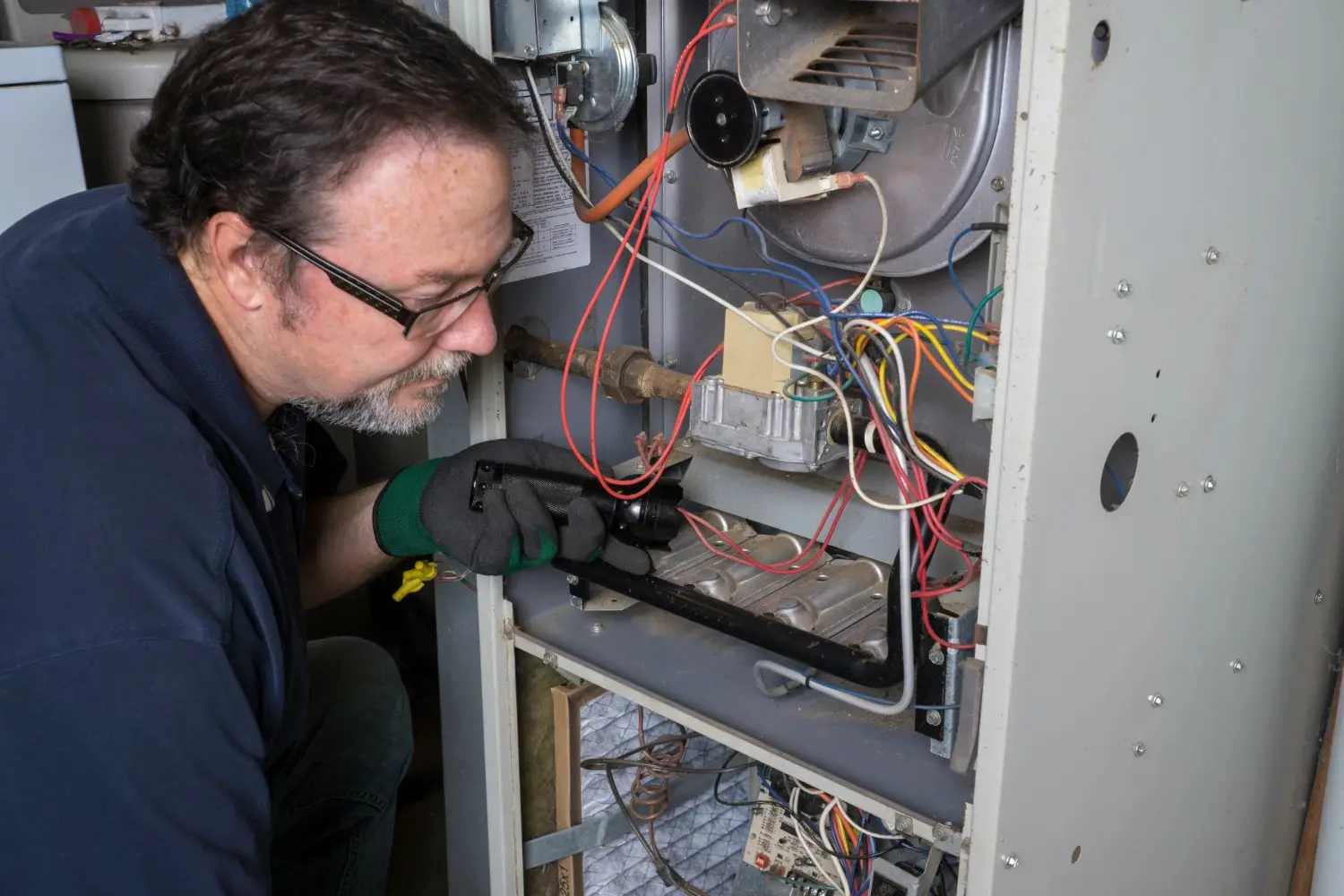
Effective furnace repair requires a structured workflow to ensure safety and efficiency. We do not skip steps or apply temporary patches to serious mechanical problems. The process is designed to minimize disruption to your household while ensuring that the repair meets all manufacturer specifications and local building codes.
Initial Assessment and Safety Inspection
- The technician begins by asking about the specific symptoms you have noticed, such as strange noises, smells, or specific rooms that are colder than others.
- A visual inspection of the furnace unit, venting, and intake pipes is conducted to look for obvious signs of wear, corrosion, or blockage.
- The system is tested for gas leaks and carbon monoxide presence before any tools are applied to the internal components.
Detailed Troubleshooting and Quote
- Specialized tools, including multimeters and manometers, are used to test electrical voltage, amperage, and gas pressure.
- Once the faulty component is isolated, the technician explains the findings clearly.
- You receive a flat-rate quote for the repair — view our promotions. This price includes parts and labor, ensuring the final cost matches the initial estimate regardless of how long the repair takes.
Execution of Repairs
- Upon approval, the technician proceeds with the repair using OEM (Original Equipment Manufacturer) or equivalent high-quality parts.
- Worn components are removed, and new parts are installed and calibrated.
- Wiring is tidied and secured, and any debris generated during the work is cleaned up.
System Testing and Calibration
- The furnace is not just turned on; it is cycled through multiple stages to ensure smooth operation.
- The technician measures the temperature rise—the difference in air temperature between the supply and return ducts—to confirm the furnace is operating within the manufacturer’s specified range.
- Gas pressure is adjusted if necessary to ensure optimal combustion efficiency.
- The thermostat is programmed or reset to your preferred settings.
Deciding Between Furnace Repair and System Replacement
Homeowners often face the difficult decision of whether to invest in another repair or opt for a full system replacement. This decision involves analyzing the age of the unit, the frequency of breakdowns, and the cost of operation. While AC Superheroes prioritizes repair whenever it is a viable and safe option, there are mathematical and practical thresholds where replacement becomes the more prudent financial decision.
The 50% Rule and System Age
A widely accepted industry standard is the 50% rule: if the cost of the repair approaches 50% of the value of a new system, replacement is generally recommended. This is particularly relevant for furnaces that are over 15 years old. The average lifespan of a gas furnace is between 15 and 20 years. Beyond this age, parts become obsolete or expensive, and the risk of a secondary major failure—like a heat exchanger crack—increases significantly.
Efficiency Considerations
Older furnaces often operate at 60% to 70% AFUE (Annual Fuel Utilization Efficiency), meaning 30 to 40 cents of every dollar spent on gas is wasted up the flue. Modern systems installed in the Austin area can reach efficiencies of 80% to 98%. If your current bills are escalating despite moderate usage, the operational savings of a new unit can offset the installation cost over time. A repair restores the unit to its previous efficiency but does not improve it.
Safety and Reliability
If a furnace has required multiple repairs in the last two years, it has likely entered the end-of-life phase. Frequent breakdowns indicate that internal components are wearing out systemically. Furthermore, if the repair involves a compromised heat exchanger, replacement is almost always the only safe option. Patching or welding heat exchangers is not a standard practice due to the high risk of failure and carbon monoxide leakage.
Future Availability of Refrigerant (Heat Pumps)
For homes utilizing heat pumps or hybrid systems, the type of refrigerant used is a factor. Older systems using R-22 refrigerant are expensive to repair if a leak occurs, as this coolant is phased out. Upgrading to a system that uses current refrigerants ensures that future maintenance is affordable and parts are readily available.
Local Considerations for Heating in Austin
Operating a furnace in Central Texas presents unique challenges compared to northern climates. While winters are generally mild, the region experiences sharp cold fronts that place sudden, intense demand on heating systems that may have sat dormant for months. This "shock" to the system is a primary cause of early-winter failures.
Humidity and Condensation Management
High-efficiency furnaces produce condensation as a byproduct of combustion. In our climate, where temperatures can fluctuate above and below freezing rapidly, ensuring that condensate drain lines are clear and properly sloped is vital. Blocked drain lines can trip safety switches, shutting down the furnace to prevent water damage. Technicians verify that these lines are clear and that condensate pumps are functioning correctly.
Gas vs. Electric Heating Infrastructure
Many homes in the area rely on natural gas furnaces, while others, particularly in newer subdivisions or specific neighborhoods, utilize electric heat strips or heat pumps. The troubleshooting process differs vastly between these fuel types. Gas systems require strict adherence to combustion air requirements and flue venting codes to prevent back-drafting. Electric systems require inspection of high-voltage sequencers and heating elements.
Permitting and Code Compliance
Any significant repair involving gas lines or the replacement of the unit requires adherence to local building codes. Safety regulations regarding flue clearance, combustion air intake, and gas piping sizing are strictly enforced to protect residents. Professional technicians are familiar with the specific code requirements for the city and surrounding municipalities, ensuring that all work performed passes inspection and maintains the safety certification of the home.
Seasonal Maintenance Windows
Because the cooling season is so long, the heating season is short but critical. The transition period in late autumn is the ideal time to test the system. However, many homeowners discover issues only during the first freeze. Local service providers structure their capacity to handle this surge, but proactive attention to strange noises or short cycling before the temperature drops below freezing ensures you are not caught in the backlog during a peak weather event — join our maintenance plan.
Technical Expertise and Safety Standards
The complexity of modern heating systems demands a high level of technical proficiency. Attempting DIY repairs on a furnace is not only dangerous due to the risks of gas leaks and high voltage but can also void manufacturer warranties. Professional service ensures that the integrity of the system is maintained and that the root cause of the problem is solved, rather than just the immediate symptom.
Advanced Diagnostic Tools
Certified technicians utilize tools that go beyond basic visual inspection. Combustion analyzers measure the exact ratio of oxygen to carbon dioxide in the flue gas, ensuring the furnace is burning clean. Static pressure manometers measure the resistance in the ductwork, identifying issues that can kill a blower motor. This data-driven approach removes guesswork and results in a more accurate repair.
Warranty Protection
Most furnace manufacturers require proof of professional service to uphold parts warranties. If a component fails under warranty, a licensed technician can process the claim and secure the replacement part, often saving the homeowner significant material costs. Additionally, reputable service providers offer labor warranties on the repairs they perform, providing peace of mind that the work is durable.
Carbon Monoxide Safety
The most critical aspect of furnace repair is ensuring the containment of combustion gases. A professional service visit always concludes with a safety check for carbon monoxide. This odorless, colorless gas is a byproduct of incomplete combustion. Technicians check the burner alignment, the integrity of the venting system, and the heat exchanger to verify that all gases are being vented safely to the outdoors.
Book Your Service Now
When your heating system fails, you need a partner who prioritizes speed, safety, and transparency. From the initial diagnostic to the final safety check, the focus is on restoring your home to a comfortable temperature with reliable, long-term solutions. Do not let a broken furnace compromise your safety or comfort.
Secure your appointment for expert furnace repair today.
What Our Clients Say
Hear from our satisfied customers about their experiences.
Your Comfort is Our Priority
Experience top-notch AC repair and maintenance services tailored to your needs. Schedule your service today!
