
Furnace Not Heating? Quick Troubleshooting Steps for You

Furnace Not Heating? Quick Troubleshooting Steps for You

Why Isn’t My Furnace Producing Heat? Simple Troubleshooting & Furnace Repair in Austin, TX
When your furnace runs but the air coming from the vents stays cold, it’s stressful—and often urgent. This guide walks you through the most likely causes, from an easy thermostat setting to more serious fuel or safety-component issues, and gives clear, safety-first steps you can take at home. We show how to tell the difference between “furnace is running but not blowing hot air” and “furnace won’t run at all,” so you focus on checks that are safe and actually useful. You’ll get straightforward explanations of ignition and fuel risks, how safety devices like flame sensors and limit switches can shut a system down, and a step-by-step troubleshooting checklist that’s safe for most homeowners. After the DIY checks, we explain when to call a pro and what to expect during a technician visit. We’ve also included commonly searched phrases—furnace troubleshooting, pilot light out furnace, ignitor failure furnace, dirty furnace filter symptoms, furnace blower motor not working—to help you quickly identify likely issues and act with confidence.
Knowing which problems you can fix yourself and which need a technician keeps you safer and saves time. This page includes quick diagnostic lists and easy tables that match common symptoms to likely causes and next steps, plus clear red flags for gas or electrical hazards. If you live in Austin, Lakeway, Bee Cave, Round Rock, Cedar Park, or Pflugerville, the guidance here reflects local service realities and emergency response considerations. Read on to learn common failure modes, follow safe inspection steps you can do without special tools, and prepare the best information to share with a technician to speed up repairs.
What usually causes a furnace to stop producing heat?
Most “no heat” problems come from a short list: thermostat mistakes, restricted airflow, ignition or fuel supply failures, safety-component trips, or blower issues that stop heat from reaching your rooms. Each problem has its own telltale signs—some furnaces keep running but blow cold air, others don’t run at all. Knowing those differences helps you choose safe checks to do yourself and gives a technician useful information. Below is a concise list of the top causes with one-line fixes so you can get quick answers.
Common causes with simple fixes:
- Thermostat set incorrectly or dead batteries — check the mode, raise the setpoint, and swap batteries if needed.
- Clogged air filter or blocked vents — restricted airflow can cause the system to overheat and shut down; replace the filter and clear vents.
- Pilot light or electronic ignitor problems — burners won’t light; verify pilot status on older systems or listen for ignitor attempts and call a pro if it keeps failing.
- Gas valve or fuel supply interruption — no combustion if gas is off or interrupted; check other gas appliances and evacuate if you smell gas.
- Dirty flame sensor or tripped limit switches — safety shutdowns that a technician can clean or test safely.
That quick list points you toward the fastest, safest checks. The table below gives a clearer symptom-to-action match so you can prioritize what to try first and what to leave to a pro.
Use this table to triage your situation before opening panels or doing anything that could be risky. Next we break down thermostat and airflow checks—the fastest fixes most homeowners can complete safely.
Thermostat problems and simple missettings
The thermostat tells your furnace when to run. Wrong mode settings, dead batteries, or communication errors can make a working furnace seem broken. First, confirm the thermostat is set to Heat and the set temperature is a few degrees above the room temperature. Replace batteries if the screen is dim or unresponsive. For smart thermostats, check Wi‑Fi connection, vacation schedules, and app-controlled modes that can block a heat call. If the thermostat is calling for heat but the furnace doesn’t respond, the issue could be wiring, a blown fuse, or a failed control board—these require a licensed technician. Clearing up thermostat vs. furnace problems narrows what to test next and saves time on the service call.
Thermostat checks naturally lead into airflow inspections, since restricted airflow often causes overheating that mimics other faults.
Airflow issues from dirty filters and blocked vents
Restricted airflow is one of the most common mechanical reasons a furnace won’t heat your home properly. A clogged filter or blocked registers can cause the furnace to overheat and shut down or simply stop moving warm air into rooms. Start with the air filter—if it looks dirty or hasn’t been changed recently, replace it. Check supply and return vents for furniture or debris blocking airflow; closed or blocked returns create pressure problems that can trip limit switches. Signs of restricted airflow include short-cycling, uneven heating, weak air at registers, and a hot furnace cabinet. If changing the filter and opening vents doesn’t fix it, schedule a duct inspection to look for collapsed or disconnected ductwork.
Often a filter change or clearing vents restores heat. If not, move on to inspecting ignition and fuel-supply items next.
Can ignition or fuel supply issues stop your furnace from heating?
The ignition system and fuel supply are what let the furnace make heat. If the pilot light, electronic ignitor, gas valve, or utility fuel is interrupted, burners won’t light and the furnace can’t heat. Older units use a standing pilot; most modern furnaces use hot-surface or spark ignitors. Fuel problems include closed gas valves, utility outages, or internal valve failures. Because these involve gas and combustion, homeowners should only perform visual checks and then call a professional if fuel or ignition faults are suspected. The table below outlines key components, likely failure modes, and when to call a technician.
This breakdown helps you understand which checks are useful and which problems need a licensed technician. Next, we cover specific pilot and ignitor signs and safe relighting guidance for older systems.
How do safety components affect heating in Austin homes?
Safety parts like the flame sensor and limit switch protect your home by shutting the burners off when combustion is unstable or the cabinet gets too hot. A flame sensor detects a steady flame and stops gas flow if the flame is weak, preventing unburned gas. The limit switch monitors internal temperatures and shuts the burner off if airflow is blocked or the heat exchanger overheats. Diagnosing these parts involves watching cycling patterns, reading control-board error codes on modern units, and basic visual checks—yet cleaning or replacing them is usually best left to technicians. The next sections explain flame sensor behavior and blower problems that can look like a generation fault.
Flame sensor and limit switch behavior
A dirty or failing flame sensor often causes the furnace to light briefly then shut off—short cycling is the classic sign. Flame sensors collect soot and oxidation over time; gentle cleaning with fine emery cloth can restore function, but do this only with power off and if you’re comfortable working near electrical parts. Limit switches trip when the unit overheats from blocked airflow; if the system has been short-cycling or had a very dirty filter, the limit switch may open until airflow is fixed. If flame-sensor or limit-switch issues keep returning, you’ll need a professional diagnosis to find the root cause.
Blower motor problems that stop heat from reaching rooms
Sometimes the furnace makes heat but the blower won’t move it into your home—warm air stays in the cabinet and registers only feel warm near the unit. Blower issues include failed motors, worn bearings, broken belts on older systems, or bad capacitors. Symptoms are humming with no fan movement, intermittent fan operation, or weak airflow. Quick checks include listening for odd sounds, confirming the thermostat’s fan-on command, and testing the fan-only setting—but electrical diagnosis and motor or capacitor replacement should be handled by a licensed technician. Separating heat generation from heat delivery helps pinpoint whether the problem is combustion, safety controls, or the blower system.
Safe troubleshooting steps you can do at home
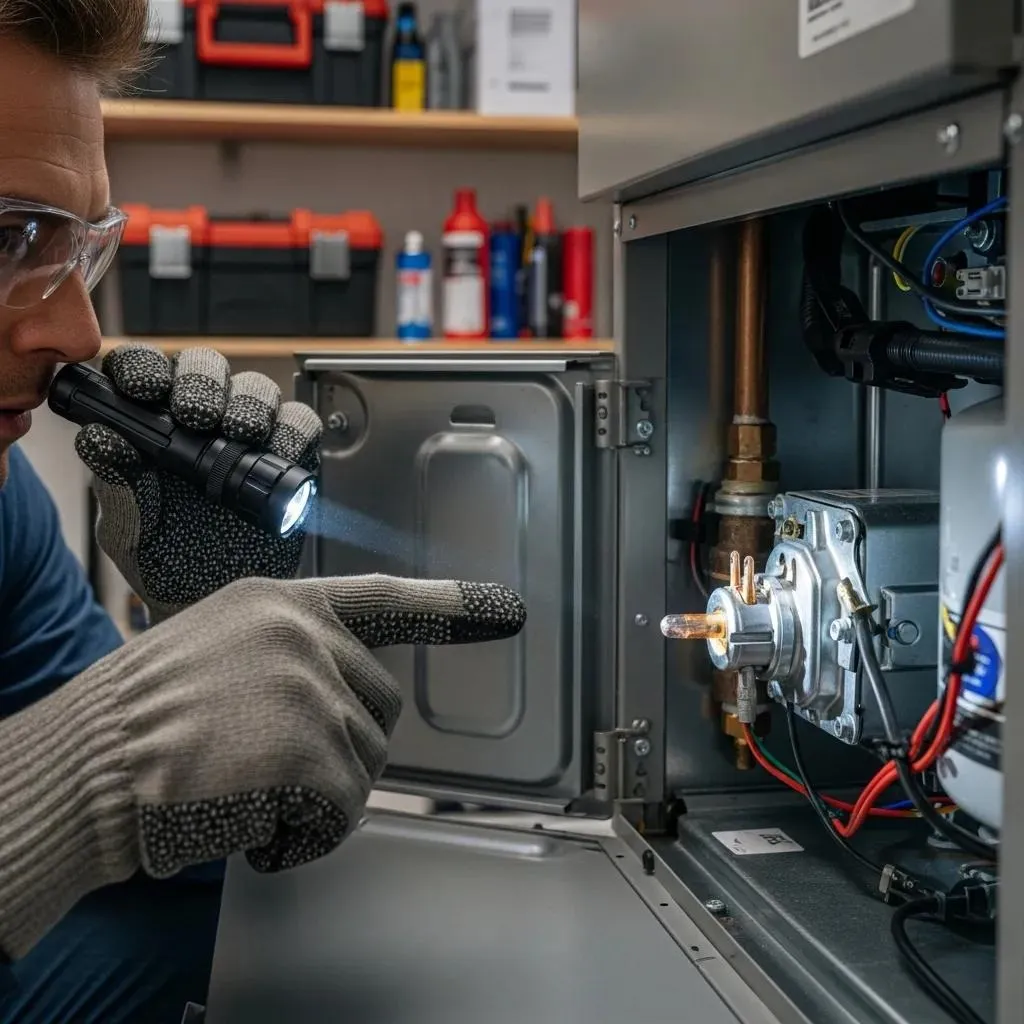
Start with low-risk checks that give useful diagnostic information without exposing you to gas or electrical hazards. Work step by step: confirm thermostat settings and batteries, check power and circuit breakers, inspect and change the air filter, watch the pilot or ignitor from a safe doorway, and write down any error codes or unusual noises. These simple steps are quick and safe, and they speed up a technician’s job if you need professional help. Below is an easy checklist you can follow, plus a compact table listing tools, safety notes, and estimated time for each check.
Follow this numbered troubleshooting checklist for safe, informative results:
- Check the thermostat: ensure it’s on Heat and the setpoint is higher than room temperature; replace batteries if needed.
- Confirm furnace power: make sure the furnace switch is on and check your breaker panel for tripped circuits.
- Inspect and replace the air filter; give the system about 10 minutes after replacing the filter to see if behavior improves.
- Observe the pilot or ignition sequence from the doorway—do not try to relight if you smell gas or feel unsure.
- Record error codes, control-board LED blink patterns, and any noises—these details make diagnosis faster for a technician.
These steps are meant to gather information safely so you can make a clear decision about next actions.
The table below is a quick EAV-style reference for each check step, with suggested tools, safety notes, and time estimates to help you plan.
When to stop and call a pro for safety reasons
Some signs require immediate professional action: the smell of gas, persistent clicking without ignition, burning electrical odors, visible flame rollout, or safety lockouts that only reset briefly. If you smell gas, evacuate everyone and call emergency services and your gas utility—do not flip switches or operate the furnace. If you suspect electrical problems (tripped breakers, burning smells), shut off power to the furnace and wait for a technician. For urgent but non-emergency issues—repeated ignitor failures, failed flame sensors, or a blower that won’t run despite power—contact a licensed HVAC provider to schedule diagnosis and repair. Make notes about what you checked to speed the technician’s visit and reduce the chance of repeat trips.
If your checks point to professional help, the next section explains when to contact AC Superheroes and what to expect during a service call.
If you completed the safe checks above and still have no heat, AC Superheroes is your local option for furnace repair. We offer 24/7 emergency response, licensed technicians, clear pricing, and maintenance plans to keep your system reliable. If you’ve found red-flag symptoms or repeated lockouts, reach out to schedule a diagnosis—telling the technician what you already checked helps them arrive prepared and speeds repairs.
When should you call AC Superheroes for furnace repair in Austin?
Call AC Superheroes when safety risks are present, when ignition or fuel-supply issues are suspected, or when blower or safety-component failures go beyond safe DIY fixes. We provide 24/7 emergency service, licensed technicians, and transparent pricing to guide you through diagnosis and repair. If you notice gas odors, persistent ignition failures, failed flame sensors, repeated limit-switch trips, or a blower that won’t run even with power, those are clear reasons to request professional repair. AC Superheroes serves Austin and nearby communities and focuses on fast, safe diagnosis to restore heating as quickly as possible.
- We offer 24/7 emergency service and quick response for urgent heating failures.
- Licensed technicians perform on-site diagnostics and explain repair options with clear pricing.
- We serve Austin, Lakeway, Bee Cave, Round Rock, Cedar Park, and Pflugerville.
These service features help homeowners decide when to call based on safety, urgency, and local coverage.
24/7 emergency response and skilled diagnosis in Austin
AC Superheroes provides round-the-clock emergency support for heating failures that affect safety or comfort. When you call our emergency line, expect a triage conversation to identify red flags and give the technician the information they need. Our licensed techs arrive ready to run a methodical inspection—checking thermostat signals, combustion sequences, blower function, and safety components—then explain findings and recommend repairs or next steps. If you need immediate help, reach out to your local HVAC provider for prompt service.
Conclusion
Knowing the common reasons a furnace stops heating helps you take the right action quickly and safely. Follow the troubleshooting steps here to rule out easy fixes like thermostat settings or dirty filters, and stop if you encounter gas, electrical smells, or repeated safety lockouts. When in doubt, call a professional—AC Superheroes is ready to help Austin-area homeowners with fast, licensed, and transparent furnace repair. Keep notes of what you checked to make any service visit faster and more effective.
What Our Clients Say
Hear from our satisfied customers about their experiences.
Your Comfort is Our Priority
Experience top-notch AC repair and maintenance services tailored to your needs. Schedule your service today!
